
 0208 540 1222


Casa Argentina | The Stories Behind the Wines -
Cabernet Franc: The Forgotten Hero of Wine, From a French Cardinal to the Argentine Andes
The extraordinary journey of a grape that travelled through centuries, crossed continents, conquered the mountains of Mendoza and earned its place in the Casa Argentina wine collection.
Chapter One
A Cardinal, a Glass of Red Wine and a Question That Changed History
France. The year is 1631.
Europe is a very different place.
Kings rule nations. Cardinals influence empires. Wine is not simply something people drink with dinner; it represents wealth, power, prestige and, occasionally, political influence.
Inside the magnificent Palais-Royal in Paris, one of the most powerful men in France is about to experience something unexpected.
His name is Armand Jean du Plessis.
History remembers him as Cardinal Richelieu, chief minister to King Louis XIII.
A man accustomed to commanding armies, influencing monarchs and making decisions that would shape the future of Europe.
But on this particular occasion, something considerably smaller captures his attention.
A glass of red wine.
According to the historical account preserved by Rutini Wines, Richelieu tastes a wine unlike those he has experienced before.
It is fragrant, elegant and remarkably expressive.
It possesses a freshness that balances its fruit, with a character that makes him want to discover more.
"What am I drinking? Where does this wine come from?"
The Cardinal wants to know where this remarkable wine comes from.
And when he discovers the answer, he makes a decision.
He wants the grape grown on his own land.
According to the traditional account, vine cuttings were sent to his vineyard, helping establish the variety in the Loire Valley.
Cabernet Franc would later become associated with the Abbey of Saint-Nicolas-de-Bourgueil and a vineyard caretaker known as Breton.
Over time, Breton became another name for Cabernet Franc in the Loire.
The story belongs to the grape's historical tradition rather than being a fully documented transcript of events.
But it captures something that remains true nearly four centuries later.
Great wine has the power to make people curious.
It makes us ask questions.
Where did it come from? Who made it? Why does it taste different?
And sometimes, one glass is enough to begin an extraordinary journey.
Chapter Two
The Grape That Lived in Someone Else's Shadow
Here is something that might surprise you.
Cabernet Franc is one of the most important grapes in the history of winemaking.
Yet for generations, it has lived in the shadow of another variety.
Its own offspring.
You probably know Cabernet Sauvignon.
It is one of the world's most recognised red wine grapes, celebrated for its structure, concentration, ageing potential and association with some of Bordeaux's most prestigious wines.
But Cabernet Sauvignon owes its existence to Cabernet Franc.
In 1997, genetic research by John Bowers and Carole Meredith at the University of California, Davis, provided compelling evidence that Cabernet Sauvignon originated from a natural crossing between Cabernet Franc and Sauvignon Blanc.
Think about that for a moment.
One of the most famous grapes in the world exists because of a variety that many wine drinkers have barely heard of.
And the family tree doesn't end there.
Cabernet Franc is also a parent of Merlot and Carménère, making it a foundational variety in the history of several great red wines.
Yet despite this remarkable heritage, Cabernet Franc rarely receives the same attention as its descendants.
Why?
Partly because it has traditionally played a supporting role.
In Bordeaux, Cabernet Franc is often used in blends, contributing aromatic complexity, freshness and elegance alongside Merlot and Cabernet Sauvignon.
It is the grape that brings balance.
The one that adds another dimension.
The quiet contributor that makes the finished wine more interesting without necessarily taking centre stage.
And perhaps that is why I find its story so fascinating.
Because sometimes the most extraordinary characters are not the ones making the most noise.
They are the ones whose contribution you only fully appreciate when you understand what they bring to the table.
Cabernet Franc had already helped create some of the world's most celebrated wines.
But its own greatest adventure was still waiting.
Thousands of miles away.
On another continent.
Chapter Three
The Call of the Andes
Imagine leaving the historic vineyards of France and travelling more than 11,000 kilometres to Argentina.
The landscape changes dramatically.
The green countryside of the Loire Valley gives way to the enormous, breathtaking presence of the Andes.
Here, in Mendoza, vineyards stretch towards mountains that seem to touch the sky.
The sun shines intensely.
The air is dry.
The soils are rocky.
And temperatures can change significantly between day and night.
This is not an easy environment in which to grow grapes.
But great wines are not always born in comfortable places.
Sometimes, the conditions that challenge a vine are precisely those that help it develop extraordinary character.
For decades, Argentina has been internationally associated with Malbec.
And quite rightly.
Malbec found a remarkable home in Mendoza, where sunshine, altitude and careful vineyard management helped transform it into the country's signature red wine.
But Malbec was never the whole story.
Argentina's winemakers understood that their extraordinary landscape had the potential to produce exceptional wines from other grape varieties too.
Cabernet Franc was one of them.
And among the most exciting places for its development was Gualtallary, in the Uco Valley.
Here, at the foothills of the Andes, the grape found conditions capable of expressing a different side of its personality.
The intense sunshine supports ripening.
Cool nights help preserve natural acidity.
Well-drained soils and carefully managed irrigation influence vine growth and fruit concentration.
The result, in skilled hands, can be a wine combining ripe fruit, aromatic complexity, freshness and beautiful structure.
Not a copy of France.
Something distinctly Argentine.
The grape had not abandoned its identity. It had discovered another way to express it.
Chapter Four
Rutini Wines: The Mentor Who Understood the Grape
Every great journey needs someone who recognises potential.
Someone willing to invest time, knowledge and patience.
For Cabernet Franc in Gualtallary, one of those important names is Rutini Wines.
Rutini belongs to Argentina's distinguished winemaking tradition and has developed an impressive reputation for producing wines that express the character of Mendoza's vineyards.
But what makes its Cabernet Franc particularly interesting is not simply the winery's reputation.
It is the attention given to the vineyard itself.
Rutini's Gualtallary estate covers approximately 150 hectares, with its vineyard elevations described by the winery as ranging from 1,180 to 1,270 metres above sea level.
Its stony soils, mountain environment and careful vineyard management create opportunities to develop wines with distinctive aromatic profiles.
Under the direction of winemaker Mariano Di Paola, Rutini has explored how Cabernet Franc can express the character of this extraordinary landscape.
And that is an important distinction.
Because producing a great wine is not simply about growing a famous grape.
It is about understanding the relationship between the grape, the soil, the climate and the decisions made by the people looking after it.
A talented winemaker cannot manufacture the identity of a vineyard.
But they can help reveal it.
They can decide when to harvest.
How to manage fermentation.
How much oak influence is appropriate.
How to preserve freshness while allowing the wine to develop complexity.
And, perhaps most importantly, when to stop interfering and allow the grape to speak for itself.
Rutini's approach to Cabernet Franc demonstrates this philosophy particularly well.
Rather than treating the variety as merely another ingredient in a blend, the winery has given it opportunities to shine independently.
From the approachable Trumpeter expression to the more complex Rutini Collection and Single Vineyard wines, Cabernet Franc has become an important part of the winery's portfolio.
And the results have attracted international attention.
Chapter Five
The Moment the World Took Notice
There comes a moment in many great stories when the hero must prove itself.
Not through promises.
Not through reputation.
But through performance.
For Rutini's Cabernet Franc, one particularly significant moment arrived when the 2016 Single Vineyard Gualtallary Cabernet Franc was recognised by the international wine publication Decanter.
The wine received 95 points and was placed 11th in Decanter's selection of the best wines of 2019, making it the highest-ranked Argentine wine in that selection.
It was subsequently recognised among Decanter's ten leading Cabernet Franc wines from around the world.
This was not simply another award to place on a bottle.
It represented international recognition for the quality of Cabernet Franc being produced in Argentina.
A grape long associated with France was now competing confidently on the world stage from vineyards at the foot of the Andes.
And the recognition did not stop there.
Rutini has also reported 94-point recognition from James Suckling for a Gualtallary Cabernet Franc in his Top 100 Wines of Argentina 2023 selection, while Tim Atkin awarded 95 points to the 2021 Single Vineyard Gualtallary Cabernet Franc.
These awards refer to particular vintages, not every bottle produced under the label.
Nevertheless, they demonstrate the consistency of the winery's ambition and the serious attention its Cabernet Franc has earned.
For anyone who believes that Argentine wine begins and ends with Malbec, this is a wonderful reason to explore further.
And for me, this is where the story becomes particularly interesting.
Because great wine is not only about what the critics think.
It is about what happens when somebody opens the bottle.
Chapter Six
What Makes Cabernet Franc So Special?
Let's talk about the wine itself.
Because you don't need to be a sommelier, understand complicated wine terminology or memorise the names of French wine regions to appreciate Cabernet Franc.
You simply need to be curious.
One of the most attractive characteristics of this grape is its aromatic personality.
Depending on where it is grown, the vintage and the winemaking style, Cabernet Franc can offer a fascinating combination of fruit, flowers, herbs and spice.
Red and Dark Fruits
Raspberry, cherry, strawberry, blackcurrant and blackberry. Sometimes fresh and vibrant; sometimes richer, almost like fruit compote.
Floral Elegance
Delicate violet notes can bring perfume and refinement, adding another layer beyond the fruit.
Herbal Freshness
Green pepper, mint, menthol and subtle leafy notes. These are part of the grape's distinctive identity, not necessarily faults.
Spice and Oak Complexity
Depending on maturation, notes of vanilla, coffee, sweet spice and gentle toast may complement the wine's natural character.
But aroma is only half the experience.
The real pleasure begins when you taste it.
Cabernet Franc frequently offers a wonderful balance between fruit, acidity and tannin.
Its acidity creates freshness.
Its tannins provide texture and structure.
And its aromatic character gives the wine personality.
The combination makes it particularly versatile at the dinner table.
Some powerful red wines can dominate a meal.
Others are so light that they disappear alongside strongly flavoured dishes.
A well-made Cabernet Franc can occupy that beautiful space between the two.
It has enough character to accompany a wonderful piece of beef, yet enough elegance to work with poultry, vegetables, mushrooms and dishes featuring fresh herbs.
And this is precisely why I believe it deserves more attention in Britain.
We love our Sunday roasts.
We love our steaks.
We love our hearty winter dishes.
And increasingly, we enjoy discovering wines that offer something beyond the familiar choices.
Cabernet Franc fits beautifully into that conversation.
Chapter Seven
Six Expressions, One Extraordinary Grape
One of the most interesting aspects of Rutini's work is the variety of ways it uses Cabernet Franc.
The grape can stand confidently on its own or work alongside other varieties to create something entirely different.
The following six wines illustrate the range described in Rutini's published portfolio. Availability, blends and technical details should always be checked against the specific vintage.
The Expression of Place
1. Rutini Single Vineyard Gualtallary Cabernet Franc
A wine built around the individuality of Gualtallary, with cherry, subtle menthol, elegant oak influence and persistent tannins.
A beautiful choice for premium Argentine beef or lamb.
The Elegant Character
2. Rutini Collection Cabernet Franc
Deep garnet colour, expressive red fruit and roasted pepper notes, balanced by a long, satisfying finish.
Particularly appealing with herb-roasted chicken, pork or mature cheeses.
The Approachable Introduction
3. Trumpeter Cabernet Franc
Bright fruit, gentle smoky notes and lively acidity.
A welcoming starting point for someone discovering the grape, particularly alongside beef stews, milanesa or grilled vegetables.
The Partnership
4. Dominio Rutini Malbec–Cabernet Franc
A published blend of 60% Malbec and 40% Cabernet Franc, matured for twelve months in French oak.
Malbec contributes richness and roundness, while Cabernet Franc brings freshness and aromatic definition.
The Balanced Duo
5. Rutini Collection Cabernet Franc–Malbec
An equal partnership of Cabernet Franc and Malbec, with French oak maturation.
Concentrated berries, cherry notes, refined tannins and a lovely balance between freshness and depth.
The Unexpected Combination
6. Rutini Antología XLVIII (48) 2016
A distinctive blend of 50% Cabernet Franc, 40% Pinot Noir and 10% Merlot, offering layered fruit, subtle pepper and coffee notes.
An illustration of Cabernet Franc's versatility in ambitious winemaking.
What I particularly enjoy about these wines is the way they demonstrate that Cabernet Franc does not have to be confined to a single style.
It can be vibrant and approachable.
It can be structured and serious.
It can bring elegance to Malbec.
Or it can become the central character in a complex wine intended for special occasions.
The grape has many personalities.
And discovering them is part of the pleasure.
Chapter Eight
From the Vineyard to the Argentine Asado
Now we arrive at my favourite part.
Food.
Because after spending years working as a chef, I have always believed that wine and food should be enjoyed together.
Not as an intimidating exercise in matching flavours.
But as part of the experience of sharing a meal.
Think about a beautiful Argentine ribeye.
Properly prepared.
Seasoned simply.
Cooked over a hot grill until the outside develops that wonderful caramelised crust while the inside remains juicy and tender.
You cut into it.
The aroma rises from the plate.
You take a bite.
And then a sip of Cabernet Franc.
The wine's acidity helps refresh your palate, while its tannins interact with the richness and proteins of the meat.
The fruit and herbal notes create contrast with the savoury, roasted flavours.
Suddenly, the food tastes different.
And so does the wine.
That is the magic of a good pairing.
Neither has to overpower the other.
They simply make the experience more enjoyable.
At Casa Argentina, we have always believed that our products should bring people together around the table.
And Cabernet Franc gives us another wonderful way to do exactly that.
Four Food Pairings Worth Exploring
Argentine Ribeye or Sirloin
Try Rutini Single Vineyard Cabernet Franc. Its fruit, freshness and structure complement the rich flavours of beautifully grilled beef.
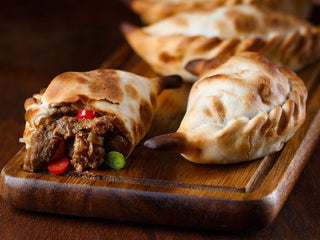
Traditional Argentine Empanadas
Dominio Rutini Malbec–Cabernet Franc is a lovely option. The Malbec adds richness, while Cabernet Franc brings freshness to the savoury filling.
Slow-Roasted Lamb with Rosemary
Rutini Collection Cabernet Franc–Malbec offers the structure and aromatic complexity to complement lamb, herbs and slow-roasted flavours.
Wild Mushroom Risotto
Cabernet Franc's savoury and herbal qualities can work beautifully with earthy mushrooms, especially in a wine with restrained oak influence.
And here's another thing.
You don't need to save a good bottle of Cabernet Franc for a birthday, anniversary or special celebration.
Sometimes, a Friday evening with a simple steak, a glass of wine and good company is special enough.
In fact, those are often the moments we remember most.
Chapter Nine
Why I Wanted Cabernet Franc in the Casa Argentina Wine Collection
Let me explain something about the way we select products at Casa Argentina.
We don't want to build a catalogue simply by adding more and more products.
That has never been the objective.
For us, the question is not how many bottles, cuts of meat or Argentine specialities we can offer.
The question is whether each product deserves its place.
Does it have a story?
Does it represent quality?
Does it offer something genuinely interesting to our customers?
And, most importantly, would I feel confident putting it on my own table and sharing it with family and friends?
That is the standard I want us to maintain.
And it is why I decided that Cabernet Franc deserved a place in our wine collection.
Not because Britain needs another red wine. But because I believe Britain deserves to discover more of what Argentine wine can offer.
We already know that Argentina produces exceptional Malbec.
But there is a whole world of Argentine winemaking waiting to be explored.
Different grape varieties.
Different vineyards.
Different climates.
Different interpretations of what a great wine can be.
Cabernet Franc represents that opportunity beautifully.
It carries centuries of European history, yet its expression in Argentina is distinctly its own.
It combines elegance with personality.
It has enough complexity to interest experienced wine enthusiasts, but it is also approachable enough for someone who simply enjoys a lovely glass of red with dinner.
And when I look at what Rutini has achieved with the variety, particularly in Gualtallary, I see the qualities we want to champion.
Craftsmanship.
Attention to detail.
Respect for the ingredients.
A commitment to producing something worth sharing.
There is also a personal reason.
As an Argentine who has spent many years building a life and business in Britain, I take enormous pride in introducing people to the quality and diversity of the food and drink produced in my country.
Not simply because they are Argentine.
But because they deserve recognition on their own merits.
A wonderful piece of Argentine beef should be appreciated because of its quality.
An exceptional dulce de leche should be enjoyed because of its flavour.
And a beautifully made Cabernet Franc should be discovered because of the experience it offers in the glass.
The country of origin is part of the story.
The quality is what makes people come back.
That is the difference.
And that is what I want Casa Argentina to represent.
Chapter Ten
The Return Home: A Wine Worth Sharing
Our story began almost four hundred years ago.
With a Cardinal.
A glass of red wine.
And a question.
Since then, Cabernet Franc has travelled through history, helped create some of the world's most celebrated grape varieties and established itself in vineyards far beyond its European origins.
It has crossed the Atlantic.
Adapted to the remarkable conditions of Mendoza.
Found a new expression in the mountains of Gualtallary.
And, through the work of wineries such as Rutini, demonstrated that Argentina has much more to offer the world of wine than many people realise.
But I don't believe the story ends with international awards, impressive vineyards or beautifully designed bottles.
For me, the story reaches its most important moment when somebody opens a bottle at home.
Perhaps it's a couple preparing dinner after a busy week.
Perhaps it's a family gathered around a Sunday roast.
Perhaps it's a group of friends enjoying an Argentine asado in the garden, arguing about who is responsible for the barbecue.
There is laughter.
Conversation.
Food being passed around the table.
And somewhere in the middle of it all, a bottle of Cabernet Franc.
Nobody needs to discuss the history of Cardinal Richelieu.
Nobody needs to remember the altitude of Gualtallary.
Nobody needs to know what a wine critic scored a particular vintage.
They simply need to enjoy the moment.
And perhaps, after taking that first sip, somebody will ask a familiar question.
What is this wine? Where does it come from?
Almost four hundred years after the Cardinal reportedly asked something remarkably similar, the curiosity continues.
Only this time, the answer is a little different.
It's Cabernet Franc.
From Argentina.
And it's wonderful.
Discover More of Argentina
From exceptional Argentine wines to premium steaks and award-winning food, discover the flavours and traditions that make Argentina extraordinary.
Explore Casa Argentina